
Our Story
There Was a Gap.Tekuma Was Built to Fill It.
Nearly two decades of frontline experience revealed a critical truth: the moments after tragedy matter.
Families and communities often have systems around them for the emergency itself and for longer-term care. But what happens in between?
That question became the beginning of Tekuma.
The Part of Crisis
No One Talks About.
When tragedy strikes, there are systems designed to respond.
Emergency responders address the immediate scene. Chesed organizations step in to meet practical and financial needs. When needed, therapists provide longer-term care.
But there is a critical period in between.
In those first hours, days, and weeks, families may be in shock while facing decisions that cannot wait. Children need answers. Schools need direction. Community leaders need to know how to respond. And the people everyone is turning to for guidance may themselves be trying to process what has happened.
For nearly two decades, Avi Tenenbaum saw this gap repeatedly while responding to crises affecting families and communities in Israel and around the world.
Professional guidance during the immediate aftermath can shape the path forward.
The First 30 Days.
The first hours, days, and weeks following a traumatic event form a critical window.
This is the window Tekuma was built to serve.
During the first 30 days following tragedy and highly traumatic events, Tekuma provides free, professional crisis stabilization to individuals, families, and communities.
Our role is not long-term therapy.
Our role is to help people navigate what happens now — and build a stronger foundation for what comes next.
Every tragedy is different.
So is every response.
We meet people where they are with the right professionals, the right resources, and a response that fits their unique needs.
From the first call through the critical 30 days, we provide hands-on support to help individuals and communities regain stability and begin to heal.
- A parent may need help understanding what to tell their children.
- A school may need guidance on how to speak to hundreds of students the morning after a tragedy.
- A family may be facing urgent decisions while still trying to process what has happened.
- A rabbi, educator, or community leader may need to know what to say, what not to say, and how to support the people looking to them for direction.

Because crisis response is not only about getting through the moment. It is about helping shape what comes after it.
Built on Frontline
Experience.
Tekuma was shaped by years of responding to crisis with individuals, families, communities, and entire systems.
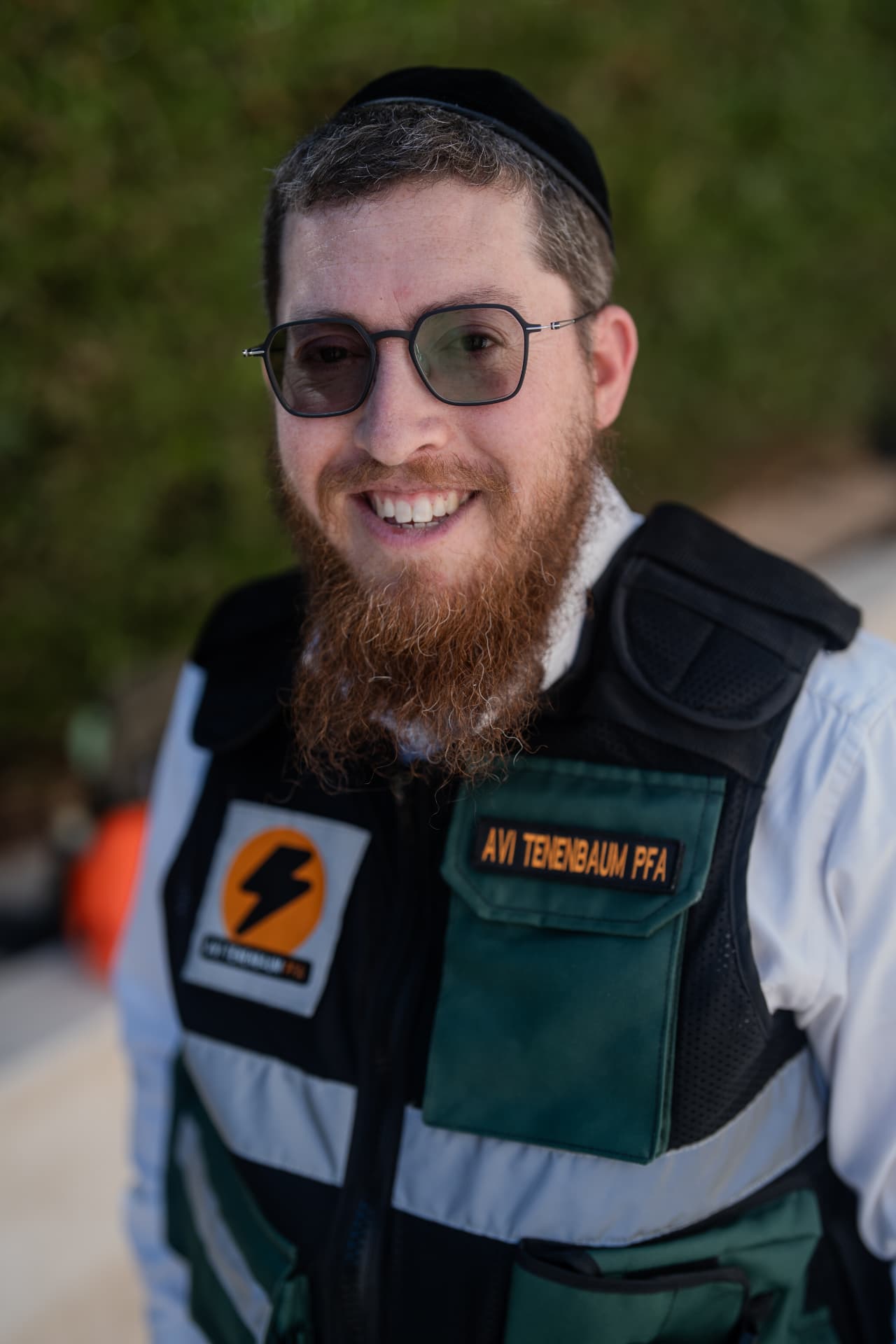
Avi Tenenbaum, MA, CASAP, Lt., EMT, C-USAR, has spent much of his career on the front lines of psychological crisis response.
His work has taken him from the homes of families facing sudden death and devastating loss to schools and communities reeling from tragedy, and to the aftermath of mass-casualty events, disasters, terror attacks, and war.
His field experience includes responses to events such as the Second Lebanon War, Hurricane Harvey, the Pittsburgh Tree of Life Synagogue shooting, the Meron disaster, October 7, and the ensuing war.
Alongside these large-scale events, Avi has responded to 2,000+ individual and community crises, including sudden death, suicide, road accidents, infant death, and other highly traumatic events.
Every one of those experiences helped shape an understanding of what people need when life changes without warning — and what effective crisis response can make possible in the days that follow.
That experience became Tekuma.
We step into the gap.
We bring stability to crisis.
We help build the path forward.